Monday, January 16, 2017

Week 5: Miss Representation post

http://usatoday30.usatoday.com/news/washington/story/2012-05-09/hillary-rodham-clinton/54860282/1
Image result for pictures making hillary look bad
Especially brought to light for me during the recent presidential election with Donald Trump and Hilary Clinton, was the way that women are judged much more harshly than men on purely their appearance. Although I wasn't quite as well informed on everything about this past election as I could have been, I did observe the way that the media treated the women in the election (specifically Hilary Clinton) different than all of the other men. The media would definitely highlight negative aspects about Trump's appearance such as his fake orange complexion and his obvious hairpiece, but it always seemed like more of a joke and the media implied that it wasn't too important or relevant. With Clinton on the other hand, the ads would always focus on making her look "crazy" or "evil" or as "lying", in a way that makes her unqualified, these are also common stereotypical insults for women that have existed for centuries. I think that this strategy used by the media to emphasize any sort of imperfections with women, even in politics, is one of the major sources of the inequalities that women constantly face. When the media puts this sort of stuff out to everyone, it engraves the implicit message that women need to look good at all times and shouldn't go into the public eye in any way if they don't want to be crucially judged on their appearance. Also when this is shown to the people, young girls could see this negativity towards women, and the focus on what they look like and be less driven to try to achieve their goals and pursue their true passions in life. I think to make a more equal society for men and women in America, one thing that must change is the way that women are portrayed in the general media, because it effects everyone one way or another.

Saturday, January 7, 2017

Week 4: Choice

https://www.ispot.tv/ad/AEHB/progressive-prank-protection#


I see this commercial very often on TV, and I thought it was pretty clever and funny when I first saw it, but it also made me realize how my interaction with media has changed. I saw that they were obviously using the Wit and Humor/Sex Appeal by giving the viewer a reason to laugh and diverting their attention from the product directly. I think this commercial definitely made many different people laugh and feel connected to this, because it portrays what seems to be teen rebels, but is really good people helping others and being "sneaky" about it. Also they are targeting many people's need to feel safe by showing their company helping them out and physically acting out the "coverage" that they're selling. After seeing this commercial many times I found myself thinking very positively of Progressive as a company, but I then had to remind myself that this was only a commercial they constructed to make me think that way about them. I also remembered how I used to let commercials influence my perception so much that I would base my whole opinion on a company or product on how good their commercial was. This leading me to realize how this is probably how many if not most Americans subconsciously form their opinions on a lot of things including what they buy.

Friday, January 6, 2017

Week 4: Merchants of Cool


The app twitter has become one of the, if not the biggest source of media for most teenagers today and represents the way that the definition of "cool" is always changing. There are many popular accounts such as "World Star" (as well as a lot of fake World Star accounts) that are constantly posting pictures, video clips, and viral tweets that represent popular attitudes on things and popular trends. This never ending stream of media that we are exposed to influences teen society and the idea of what is "cool" in a huge way. As I have observed so many times on twitter some viral song, dance move, vine, etc will become popular for a while, until it becomes too widespread or "mainstream" and something else replaces it immediately. This makes twitter a good place for companies to "cool hunt" and advertise to specific audiences. I suspect that the same "cool hunting" that companies were doing in the "Merchants of Cool" video in the early 2000's, is still happening today with social media and specifically twitter. Companies could be assigning social media experts to try to create a "cool" image for them from what is trending/popular on twitter. Although, this strategy is a very difficult one to succeed with because of the rapid changing of "cool", and how by using something cool in advertising you quickly make it not cool anymore, because it has become "mainstream" or "overused". In conclusion, you can easily observe the constant changing of what is perceived as "cool" through the twitter app with the many trends that come and go over time.

Tuesday, December 20, 2016

Week 3 post

This Nike Football (Soccer) advertisement was released on the internet over the summer, right before the Euro 2016 (European national teams championship tournament) and became very popular all around the world much like previous Nike advertisements of its kind. It is a different type of advertising than simply airing repetitive TV commercials and engages the audience in a mini story that is centered around a product(s). In this case Nike was advertising a wide range of products by embedding them in the story and having them be right there when the story appeals to certain audiences, so that people remember the product and the brand as being associated with a feeling or action. They were definitely attempting to appeal to the need to achieve by showing the two characters constantly working to improve and achieve success in their situation. One implicit message that I saw in this was that you (the average person) aren't capable of being successful in football, because the only reason the kid was able to become a successful pro was when Cristiano Ronaldo himself switched lives with him and then worked hard for him to become a professional. Although that is an implicit message I saw just now, when I first saw it I was inspired and saw things like the slogan "#sparkbrilliance", telling me that I could achieve success if I worked hard and bought Nike gear to help me do so.


Video: https://www.youtube.com/watch?v=scWpXEYZEGk

Saturday, December 10, 2016

Week 2: "Persuaders" technique


Image result for psych show car
Image result for the blueberry psych
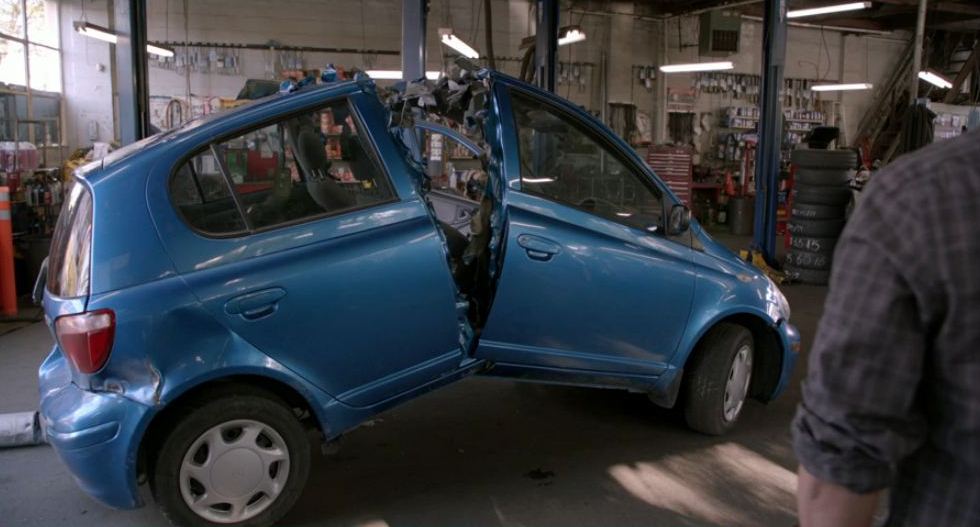
In the TV show psych that stopped airing 2014, one of the two main characters owned a car that they always drove around in to investigate things on their own. They referred to this car as "the blueberry", but you could always see that it was a Toyota Echo. Although they often pointed out that it was not the coolest car in the world, the owner of it (Gus) always argued its reliability and affordability, like many other things he owned. "The blueberry" lasted the whole entire 8 seasons until in the last season it was finally split in half by an assassin's car and they could no longer drive it. In one episode the blueberry was in the shop so they got a rental car that was the exact same car, only in red so they called it "the cranberry". The two main character's developed a love for the car throughout the 8 seasons and it was comical that this car that didn't look that impressive, but could last them through their many crazy adventures and do everything they needed it to. I think that with this product placement they were attempting to connect with a specific audience of people that are like Gus, that believe in certain things strongly, even if they aren't seen as cool or desirable by others. The overall idea of defying expectations is what Toyota is attempting to put out to this audience about their product. 

12/10/16

Week 2: choice entry

https://www.ispot.tv/ad/7F3E/schick-xtreme-3-interview#

This Schick Razor commercial uses certain strategies and techniques to target specific audiences and their needs. First of all I saw this commercial originally during the Super Bowl and have seen it in other sports events since. What I think is that they are attempting to target an audience of a wide range of men from in their 20s and up, that need to shave. It is obvious that they are trying to connect with the need for autonomy because first, the main character is sitting in a chair on the opposite side of all of his competitors for the job, hinting that he is different. Second, he sees the pictures of the leaders at the company and sees that they are all bald, so he takes a risk and buys a razor to make himself bald also, giving him the edge for first impressions with the boss. Also this commercial is using the "wit and humor/sex appeal" because it gets the audience to maybe laugh a little bit and admire the cleverness of the main character. Another technique being is "Avante Garde", because this commercial suggests that using this specific razor with set you apart from the rest and make you look good in order to succeed in many ways (him having the edge for the interview and the girl giving him a look). Possibly another need that is being targeted is the need for prominence, because he was immediately admired and respected after he used the razor to shave his head and face. There are multiple implicit messages embedded in this ad, one being that this razor gives you a quick, easy, and clean shave that'll make you look and feel good. Another implicit message being that cleverness will bring you success with women and with your job. As well as the message that women have very different jobs than men, because there were no women waiting to be interviewed, only one that worked at the front desk.

12/10/16

Monday, December 5, 2016

Post #2: prompt 1

The news story that I chose is the Dakota Pipeline issue that has been debated and covered heavily since at least late July this year. It is the issue of whether a 1,172 mile long pipeline carrying oil all the way from North Dakota to Southern Illinois should go through the Standing Rock Sioux Reservation in North Dakota. The Native Americans there and many other supporters have been protesting this construction for fear that it endangers their water supply and interferes with many of their cultural sites, as well as endangers the overall environment because of possible oil leaks. People are on the other side, supporting the construction of the pipeline and opposing these protests because the company has all the legal permissions to build it, the protests are becoming dangerous for those protesting, and this is halting important infrastructure for the United States.

The first news source that I chose was the New York Times which tends to be a more liberal source of information. It was an article posted December 5th after the decision by the government to postpone the construction, and used much language to connect with the liberal audience they were most likely targeting. Examples of this are things such as the use of words with heavy connotations such as "defied" in the statement: "On Monday, many protesters defied an order by the Army Corps of Engineers to leave a campsite north of the Cannonball River." By saying that they "defied" the order instead of maybe "disobeyed" or "didn't follow" it, the author is attempting to target this audience that generally tends to want to help and stand up for those that have been poorly treated in the past or recently, the Native Americans definitely being one of those groups of people. Also the use of this word "defied" could be perceived by a more conservative audience as negative and shameful because of their tendencies to support the pipeline and the people protecting and building it.This article also used most of their quotes from liberal people in politics and the Native Americans/protesters. Overall, the message you could take away from this article was that the stopping of construction of this pipeline was a positive and joyful achievement, as well as a step in the right direction. 

The next source that I read was Fox News, which tends to be a more conservative source of information. The article that I read was on the same exact issue, posted on the same day, but was very different in its message and word choice. One example is when it said "The decision handed a victory to the Standing Rock Sioux tribe and its supporters...",  using the phrase "handed a victory" to imply that nobody was fighting for the cause of the pipeline and that this was a horrible mistake. In doing that they are targeting a large population of conservatives who stereotypically are displeased with the current government. Later in the article this is also clearly stated when it said:"The company building the pipeline, Dallas-based Energy Transfer Partners, slammed President Obama’s administration in a statement, calling the move political." This statement attempting to rally on the general hate of the Obama Administration within many conservatives. Overall this article used one quote from any Native Americans or liberal people and many different quotes from various conservative government officials such as Paul Ryan. While casting a very negative light on this decision and its meaning in America.